Dairy, oat, soy: what milk does to your coffee
Why steamed milk tastes sweeter, what barista editions do differently, and how oat, soy and almond drinks taste in a cappuccino.
Publié le 22 novembre 2026
Cet article n’est pas encore traduit et s’affiche en anglais.
In most cafés there is more milk than espresso in the cup. No surprise that the milk shapes the taste at least as much as the bean. A quick look at what happens when milk is steamed and how the options differ.
What happens when you steam milk
The steam wand pushes hot steam and air into cold milk. Three things decide the result: protein, fat and milk sugar.
Proteins wrap around the air bubbles as they heat and keep the foam stable. Fat gives the creamy mouthfeel. And lactose, the milk sugar, tastes noticeably sweeter warm than cold. But that sweetness only appears in a narrow window.
The right temperature
The Specialty Coffee Association recommends heating milk to 55 to 65 °C, with 70 °C as the maximum. In this range dairy milk tastes sweetest and the foam is velvety. Any hotter and the sweetness drops, the proteins clump and the milk tastes cooked.
Rule of thumb at home: if you can just about hold the jug comfortably, the temperature is right.
Dairy milk
Whole milk is the easiest to work with. It gives a dense, glossy foam and plenty of natural sweetness. Low-fat milk foams fast and high, but the foam is drier and coarser and the taste thinner.
Oat drink
The most popular plant-based option in cafés. Oat tastes slightly sweet and cereal-like and pairs well with chocolatey, nutty espresso. Naturally it is low in fat and behaves a lot like low-fat milk: it foams quickly but turns bubbly easily.
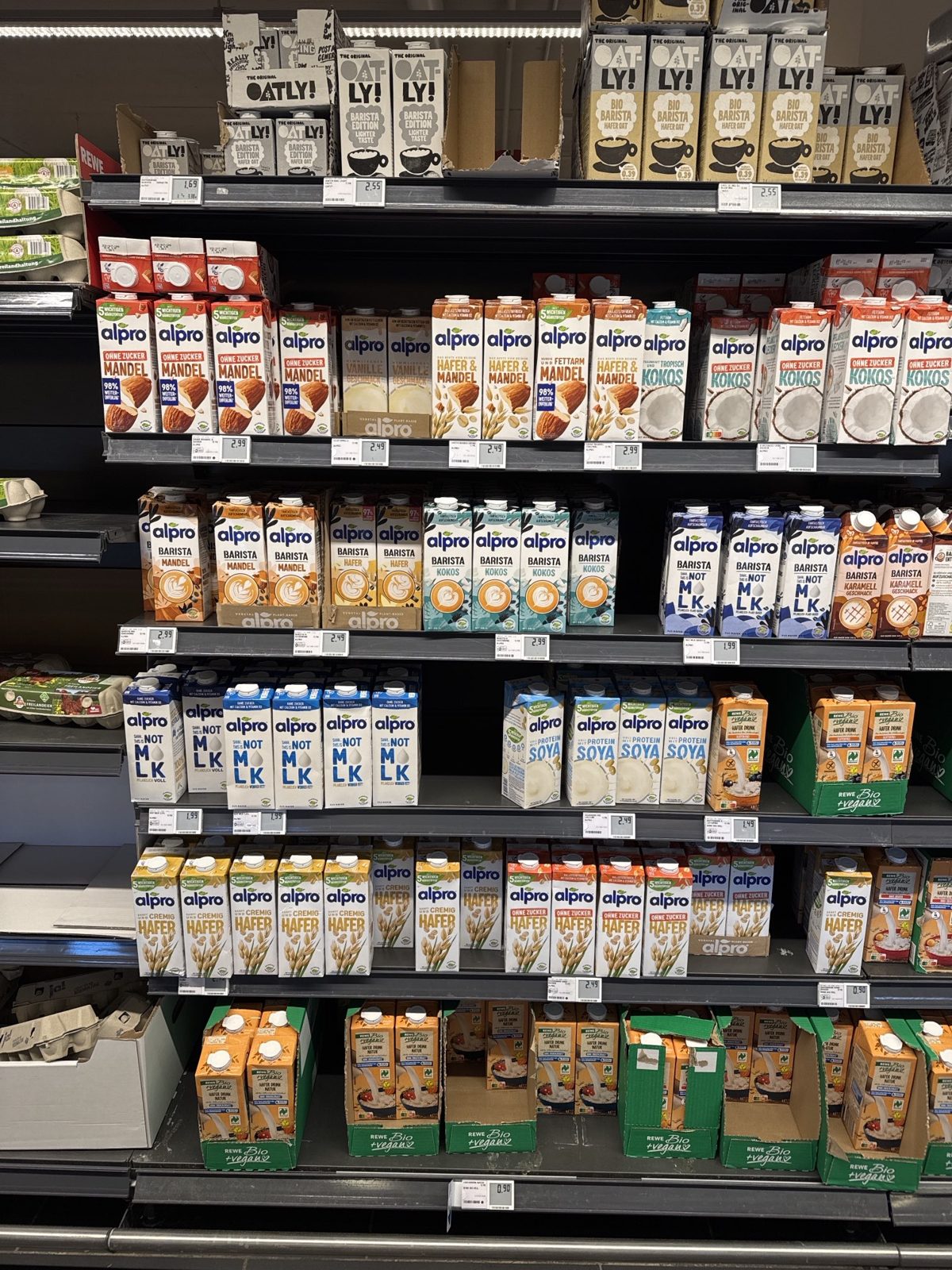
That is why barista editions exist. They contain added plant oil and other ingredients that make the foam more stable and creamy and stop the drink from splitting in hot, slightly acidic coffee.
Soy drink
Soy is high in protein and comes closest to dairy foam: fine, glossy and good for latte art. It tastes fairly neutral to slightly beany.
The catch: soy is sensitive to heat and acidity and can curdle. Keep it below about 60 °C when steaming.
Almond and others
Almond drink tastes lightly nutty but is thin and hard to foam; the foam collapses quickly. Barista versions help here too. Rice drink is very sweet and watery and barely foams. Coconut brings a lot of its own flavour, while pea and cashew drinks sit somewhere in between.
All drinks compared
| Drink | Pros | Cons | kcal / 100 ml |
|---|---|---|---|
| Cow's milk (3.5 %) | Naturally sweet, dense and glossy foam | Lactose, animal product | approx. 65 |
| Oat | Mild and sweet, suits chocolatey espressos | Regular version turns bubbly quickly | approx. 40–50 |
| Soy | High protein, finest foam, good for latte art | Can split, slightly beany | approx. 35–40 |
| Almond | Nutty, very few calories | Thin, foam collapses quickly | approx. 15–25 |
| Rice | Naturally sweet, easy to digest | Watery, barely foams | approx. 45–55 |
| Coconut | Few calories, exotic note | Strong flavour of its own | approx. 20–30 |
| Barista editions | Stable, creamy foam, rarely splits | Added oil, often more ingredients | usually 10–20 more |
In short
- Whole milk: sweet, creamy, easiest
- Oat (barista): mildly sweet, cereal notes, the all-rounder among plant drinks
- Soy: fine foam, neutral, but sensitive to heat and acidity
- Almond: nutty and light, hard to foam
- Always: 55 to 65 °C, no hotter
Plus d’articles
- Espresso basics: ristretto, lungo, doppio, extraction and grind size
- Light or dark roast, and what “specialty” actually means
- Latte art: heart, tulip, rosetta and what is behind them
- Flat white, cappuccino, latte macchiato, caffè latte: the difference
- Why coffee should not be too hot
- Bean, barista, machine: why a La Marzocco is a good sign
- Made by hand in Florence: the story of La Marzocco
- Linea, Strada, KB90: how to recognise La Marzocco models
- How to spot a La Marzocco and add it to the map